Solve the problems your business
has learned to live with.
I'm a consultant who helps businesses improve how they operate. I start by listening to the people who run the work day to day, understanding what has frustrated them for a while and working out what would genuinely improve it.
The initial consultancy is free. You come away with a practical direction, not a sales pitch for a solution I decided before we met.
Based in the West Midlands · I work with a handful of clients at a time · You deal with me start to finish
Start with the situation, not the technology.
It is usually the work between systems: copying information, chasing answers, rebuilding documents, maintaining spreadsheets and relying on one person who knows the workaround. Those small frustrations accumulate into hours of work and make a growing company harder to run.
Sometimes the software you already have can be made to work better. Sometimes one missing connection or a focused tool is enough. Sometimes bespoke software is the right answer. The first job is to understand which and turn that into a roadmap you can make decisions from.
What I actually do
Useful advice before you commit to building anything.
Start with a free consultation
We sit down with the people who know the business and walk through what is frustrating them, what they would like to achieve and how the work happens today. You do not need a specification or a solution in mind. This is also the best way to see how I think and whether I can help.
Get a plan and roadmap
I identify the underlying problems, the opportunities and the practical options. You get a clear plan for what you would like to achieve, what to tackle first and what can wait, including an honest view of costs, risks and likely benefits.
Choose the right way forward
The answer might be a process change, a connection between existing systems, a focused automation or bespoke software that fits the business like a glove. If you already build your own AI systems, I can also make them more robust and support them for you.
The first consultation costs nothing. If there is a worthwhile project, we can start with the highest-value step and expand only where the result justifies it. How a job runs →
The kinds of work I can help improve
Practical, repetitive work where the information already exists and a person should remain in control. The technology follows the job, not the other way round.
Answers the phone and takes the booking
A phone agent that handles the routine calls — takes the booking, checks availability, confirms the details — and passes anything unusual straight to a person.
Reads the inbox and drafts the reply
Enquiries, requests for information, chasers. It pulls the details together, drafts the response to your rules, and leaves it for someone on your team to check and send.
Builds the quote from what you already hold
Prices from your own rate cards and rules rather than inventing a number, and assembles the quote from the information already sitting in your system.
Takes out the clicks
The fields your team retypes, the forms they fill from data the system already has, the same five screens every job. If the information exists, it shouldn’t need typing again.
Reads tenders and drafts the response
Pulls every question and the marking criteria out of an ITT, drafts answers grounded in your previous responses, and checks them against the criteria before submission.
Prepares the paperwork
Order confirmations, job sheets, service reports, certificates and handover packs — drafted from the job itself, ready for someone to sign off.
Fewer errors, fewer forgotten follow-ups, and the repetitive parts of the business turned into something that just runs. Often that means improving what you already have. Where it cannot sensibly support the work, bespoke software is now available at a fraction of its traditional cost and can be built around your exact use case.
Nothing has to change overnight
The two things that stop most businesses starting: the risk of change, and not knowing whether it'll really work for them. Here's how both are reduced.
Start with one bounded improvement
Choose one workflow, agree what a useful result looks like and test the change without disrupting the rest of the business. If a larger system change is eventually justified, the old and new can run side by side while you move across in stages.
See it working before you commit
If it's something small, no more than a couple of days' work, I'll build a demonstration using an anonymised or sample job, free of charge. It lets you judge whether the idea is useful before discussing a live system, integrations or a wider commitment.
Work in progress, and work in use
Validera
LiveA recommendation tracker for their internal audit practice — findings followed through to closure in one place, instead of across spreadsheets and email chains.
Chase Plant Hire
In buildReplacing their off-the-shelf plant hire software with a bespoke system built around how they actually run the yard, with the AI in it from day one.
Tender response agent
In buildReads an ITT, extracts every question and the marking scheme, and drafts responses grounded in the answers you’ve already had marked well.
Why not just build it yourself?
It's a fair question, and one I'd ask. The tools that make this affordable are available to anyone now, and you could pick them up.
But you're already being pulled away from running the business. Doing it yourself means finding the time to map the process properly, learn the tools, build it, test it — and then keep maintaining it, on top of the day job.
And a working demo isn't a working system. If your customers are wary of AI making mistakes — and in a regulated industry they're right to be — what you actually need is the controls, the validation, the audit trail and a sensible way of working around it. That part comes from experience rather than tooling.
I build these things continually, so I already know the pitfalls, the patterns and the pieces that don't need reinventing every time. That usually means I can get you there faster, and for less, than building it from scratch — which is why it's worth getting a quote even if you fully intend to do it yourself. You might be surprised how affordable something properly designed turns out to be.
And if you're not ready to build anything at all, I'm happy to be a sounding board.
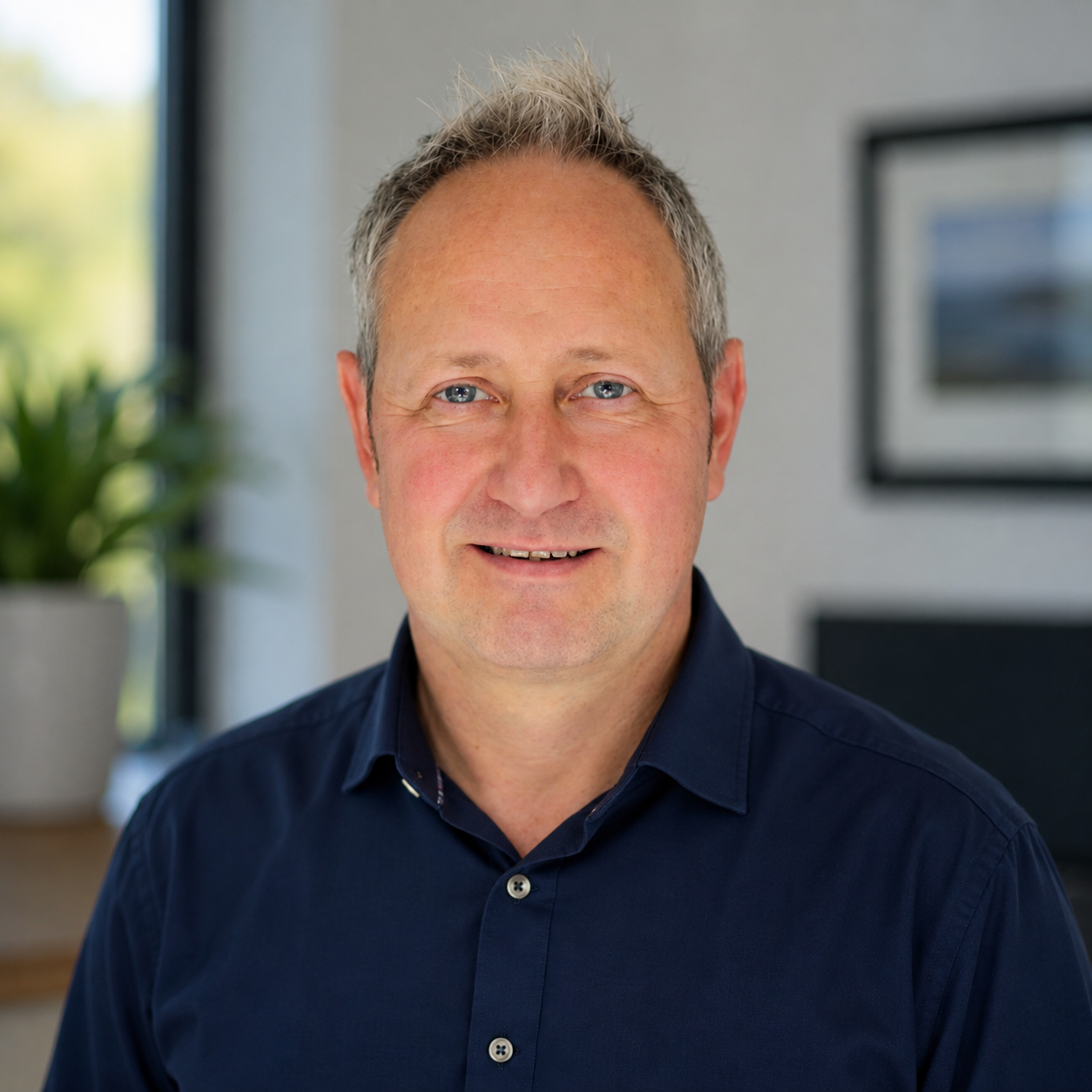
Why me, rather than anyone else
I'm Adrian Chapman. I run Chapman AI from Aldridge in the West Midlands, and I work with businesses across the UK — manufacturing, engineering, professional services, the kind of firms where the software was chosen years ago and everyone has quietly built workarounds since.
I trained in electronics and designed hardware systems, then wrote the firmware that ran on them. From there I worked on machine learning, and later deep learning, embedding those algorithms directly onto the hardware itself — and I was automating work back in the 2000s with Python and classical computing, long before any of it got called AI. Most people building AI solutions today, software developers included, have only started using it since ChatGPT arrived. I've had years to learn where these systems genuinely pay off and — just as usefully — where they fall over.
I've worked inside service organisations streamlining how they run: bringing in new processes, taking out waste, and getting people working in better ways. So I don't simply rebuild what you already have. While I'm designing the software I'm looking at the process with you — what can be simplified, and what only exists because the old system demanded it. Replacing your system is the one real opportunity you get to redesign the way you work. Improving the underlying processes is valuable in itself, and adding AI on top of that is a real multiplier — it's the difference between adding some AI and building something genuinely remarkable for your business.
I take on a few clients at a time, so what I build is shaped around how you actually work rather than pulled off a shelf. There's no account manager and no handover to a delivery team — you talk to the person building it, from the first conversation to the last release. And if you're nearby, I'll come to you.
Safe enough for your real work
The reason your team can use this on the everyday work they'd never put into a public AI tool.
Your data stays yours
Your choice where it lives: hosted in the cloud, or on your own server on site. The strongest AI models run off-site, so that step is processed elsewhere — and it can be kept to the UK or EU if that matters to you. What never happens, wherever it runs, is your data being used to train anyone’s model.
A person stays in control
The AI proposes; your team approves. Nothing goes out — no quote, no email, no booking confirmation — without sign-off, and every step is recorded.
Never invents a number
Prices and answers come from your own rates, records and rules. If it doesn’t know, it says so rather than guessing.
What are you paying for software right now?
That's the conversation. Tell me what you're running, what it costs you a month, and where your team works around it — and I'll tell you honestly whether replacing it makes sense. Let's have a chat, and you can bounce your ideas off me.